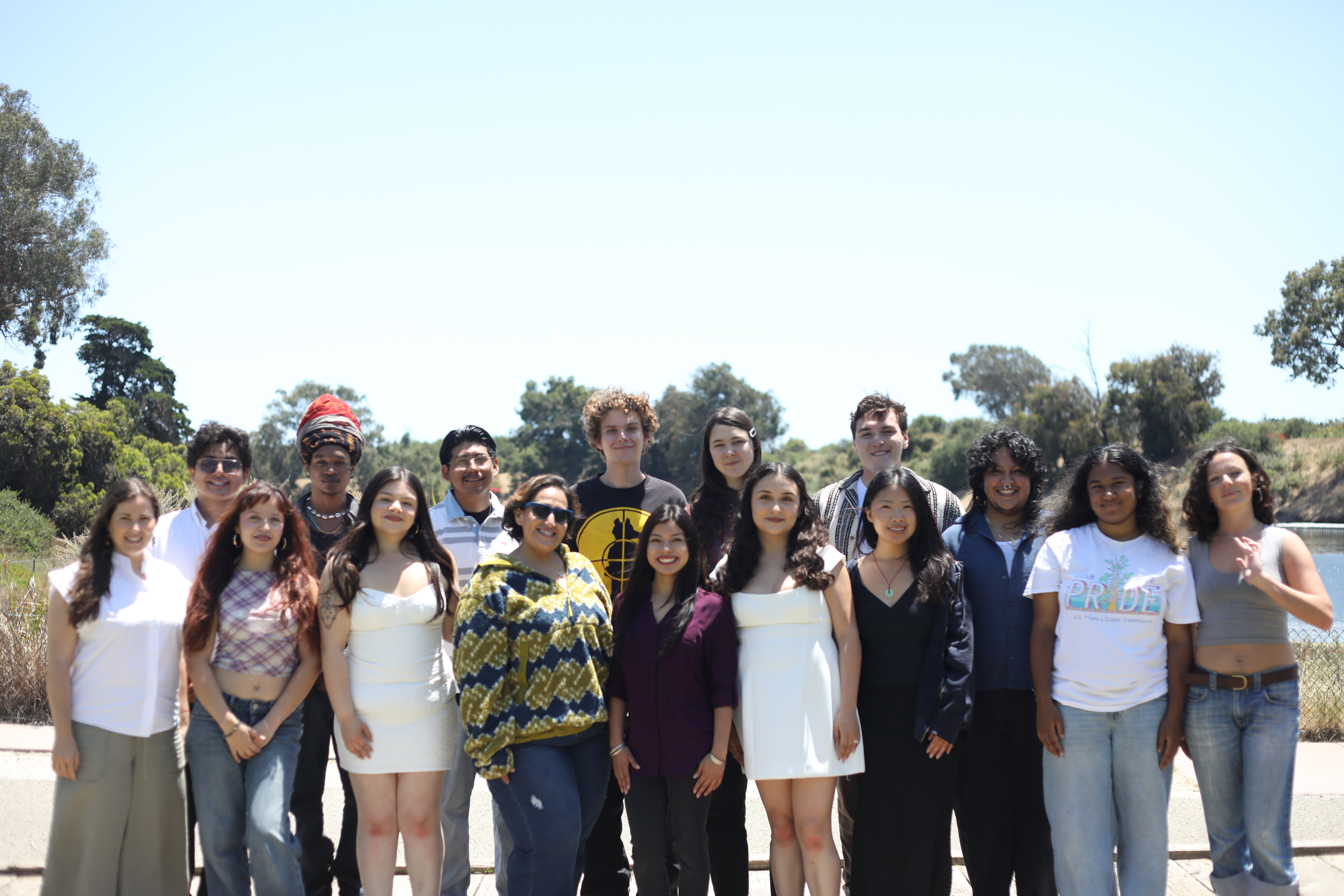
A new generation of student organizers is entering the local workforce as UC Santa Barbara’s Pathways to Change program celebrates its inaugural graduating cohort. With the conclusion of the 2026 academic year, several students from the program are embarking on summer internships directly embedded within Central Coast community organizations[MOU1] , marking a successful expansion of the university's civic engagement initiatives.
The program, which also places students in internships throughout California and nationwide, evolved from the former Intersectional Justice Facilitators Certificate Program, a collaborative initiative involving the Division of Social Sciences, the multicultural center and PACE, Professional and Continuing Education. Diane Fujino, Pathways’ Director and Professor of Asian American Studies, explained that the previous iteration ended in June 2024 following shifts in university leadership and the disruptions of the pandemic. "Pathways to its origins are in the Intersectional Justice Facilitators Certificate Program," Fujino said. "We wanted to develop a community engaged internship program for students."
The restructured program now spans two quarters over a six-month period across winter and spring, following a preparatory feeder class in the fall. Students learn the history of community organizing and collaborate with community advocates online and in person. During the field component, students are organized into pods of three to interface with regional advocacy groups.
This year’s partners include the Santa Barbara Tenants Union (SBTU), Mixteco Indígena Community Organizing Project (MICOP), Central Coast Alliance United for a Sustainable Economy (CAUSE), National Korean American Service & Education Consortium (NAKASEC), Planned Parenthood, and SBResiste.
Andrea Medina, Pathways’ instructor and coordinator, noted that the initial year has yielded strong foundational outcomes while offering clear insights for future terms. “The inaugural year of Pathways affirmed that hands-on, experiential learning in the classroom, coupled with grassroots practice, has a significant impact on students’ academic, personal and professional growth. By collaborating alongside local organizations, students were able to apply theoretical concepts in real-world settings while gaining a better understanding of the challenges and opportunities involved in community advocacy work.
"Working directly with the tenants union gave me a completely realistic understanding of local housing advocacy," one student participant responded. "It allowed me to see organizing as a viable professional trajectory rather than just an extracurricular activity." Another student credited the course curriculum with providing career readiness, stating, "The program built the professional confidence I needed and directly facilitated my placement into a paid summer fellowship."
Five students are about to begin their summer internships with organizations including CAUSE, Santa Barbara Tenants Union, VC Defensa, Buen Vecino and other regional organizations: Amari I. Epa; Fred R. Torres; Olivia J. Hackworth; Marissa K. Wong; and Caren Chávez-Villanueva.
As organizers look toward expanding enrollment for future terms, the core mission remains centered on professional preparation.
“The Pathways to Change program not only teaches scholarly knowledge and experiential learning in community placements, we made sure to integrate professional career development skills-building,” Fujino said. “The program exceeded our expectations. Students found the classes and program deeply meaningful, personally transformative. It's deepened their commitment to justice-oriented, community-based careers."
Pathways to Change’s Inaugural Cohort includes, in back row, from left: Phakdey Ou; Amari I. Epa; Fred R. Torres; Luke T. McGuire; Alma S. Love; Antonio J. González-Bradford. In front row, from left: Dr. Andrea Medina; Meadows V. Stevens; Angie Ocampo; Ana Brenda Valdivia Razo; Saleen D. Goytia; Emily González; Marissa K. Wong; Caren Chávez-Villanueva; Savi Bansore; Olivia J. Hackworth. Not pictured: Mia A. Ogebee; Hari P. Chipiri; Lizzie M. Teeter.careers.”
Story by Nicholas Schou