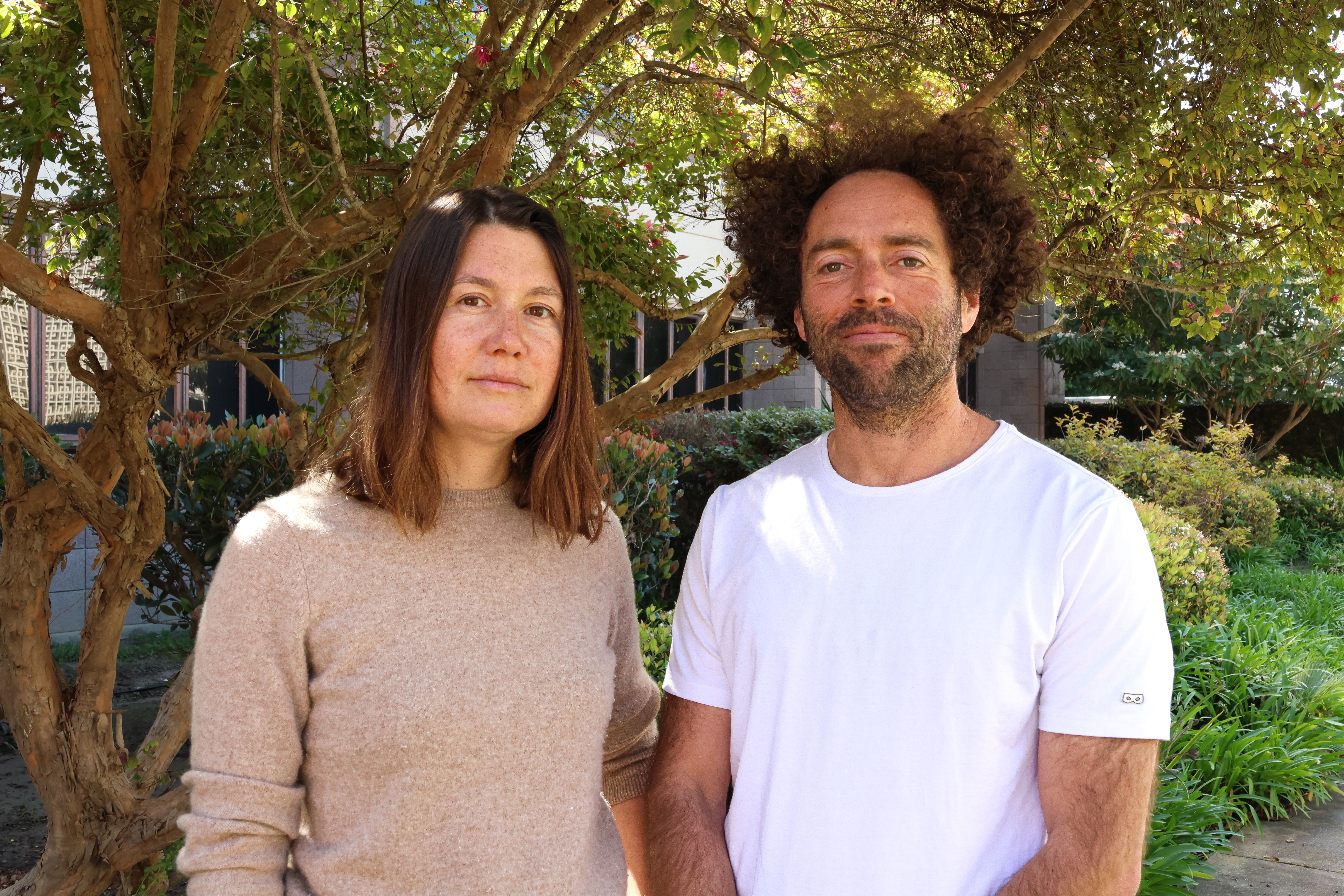
As an economist schooled in the prestigious halls of HEC Paris and UC Berkeley, Dr. Youssef Benzarti specializes in the intricate interactions between governments, firms, and individuals. After arriving at UC Santa Barbara in 2018, he and his colleague, Professor Alisa Tazhitdinova, a fellow Berkeley PhD alumna specializing in individual tax responsiveness, established the Public Finance Lab (PFL), with with foundational funding from the Thelma and Walter Mead Initiative.
The lab’s mission, Benzarti explains, is fundamentally public-facing and community-engaged: to inform the public on government-related issues and help them access data and information that, while technically publicly available, isn’t necessarily easy to trace. One of the lab's first major initiatives took them to Los Angeles Valley College. There, Benzarti tackled a persistent social hurdle: why were "parent-students"—many of whom are single parents at high risk—not accessing available benefits like SNAP (CalFresh) or free diapers?
"We designed the survey, and we surveyed parent-students to try and understand what the issues were,” Benzarti said. "Whether they related to stigma, or they related to information, or they related to just access costs—essentially not wanting to bother with it." The lab provided these findings directly to the college to help streamline aid.
Closer to home, the lab is currently developing a comprehensive data portal for Santa Barbara County. This "real-time" website aims to centralize local data points that directly impact quality of life, such as crime rates, inflation, and even groundwater levels. “Sometimes people complain about crime, and so it'd be a good idea for them to see whether the crime has actually increased, decreased, how it compares to the rest of the country, so that they can make informed decisions when voting,” he explained.
While Benzarti builds the data infrastructure, Tazhitdinova is leading a charge to boost what she calls UCSB’s and the broader public’s "tax literacy." Recognizing that many people "leave money on the table" due to the complexity of the tax code, she has developed specialized guides for UCSB students and faculty.
"I found that a lot of people are not very familiar with the tax regulations, tax rules, and as a result, they don't fully respond appropriately," she explained, adding that one of her goals is to demystify UCSB’s myriad of retirement accounts. "I would like to demystify the tax process for people,” she said. “We have different tax literacy products depending on the needs that a given person might have."
More than anything, Tazhitdinova’s PFL research is motivated by the knowledge that the tax systems’ constantly evolving intricacies seem to unfairly result in many individuals who lack the resources to leverage tax laws to their benefit paying more taxes than they actually owe. "People are leaving a lot of money on the table," she says. "And it's unfortunately always unequal. The people who have already a lot of money are more likely to tax optimize."
The PFL is currently preparing for a full public launch—ideally timed for the upcoming tax season. With help from a team of undergraduate and graduate student researchers, Benzarti and Tazhitdinova hope to create a visually compelling digital platform for tax literacy resources to the UCSB community with the aim of eventually expanding their reach, potentially across the entire UC system and to the broader community.
About The Walter and Thelma Mead Initiative for Innovative Economic Policy: Established through a generous gift from Thelma and Walter Mead, who was a longtime UCSB Economics professor, the Mead Initiative supports economic research that places UCSB faculty at the forefront of economic policy discussions, while also supporting the training of undergraduate and graduate students.
Story by Nicholas Schou